Dynamic Pricing Strategies for Gainesville Airbnb 2026
As we approach 2026, Gainesville’s short-term rental market continues to evolve. With the University of Florida driving consistent demand and the city’s growing appeal to visitors, hosts who implement intelligent dynamic pricing strategies stand to significantly outperform those using static rates. This guide explores how to use real-time pricing, UF calendar events, and local demand data to maximize revenue in the Gainesville Airbnb market.
Why Dynamic Pricing Matters in Gainesville
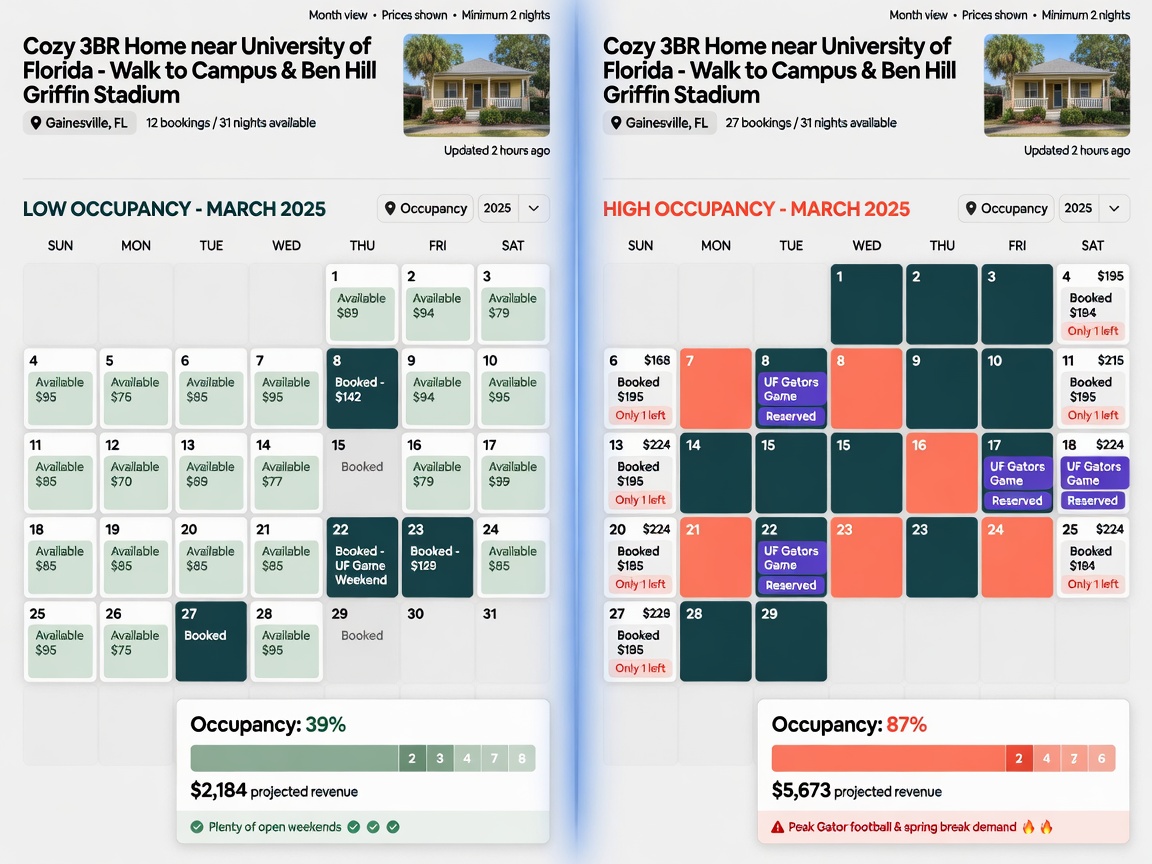
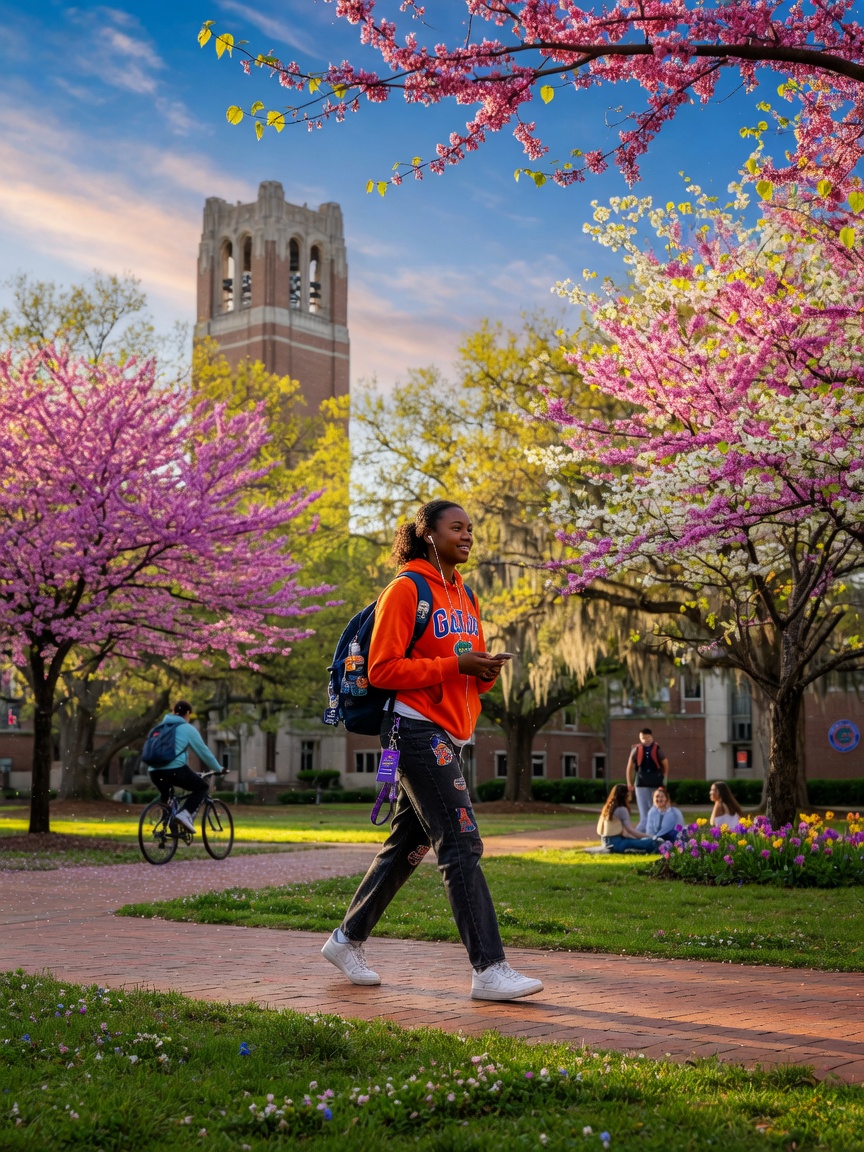
Unlike vacation destinations with predictable seasonality, Gainesville experiences sharp demand fluctuations tied to the academic calendar, athletic events, and local festivals. Traditional fixed pricing leaves substantial revenue on the table during peak periods and results in low occupancy during shoulder seasons.
Image Grid 1



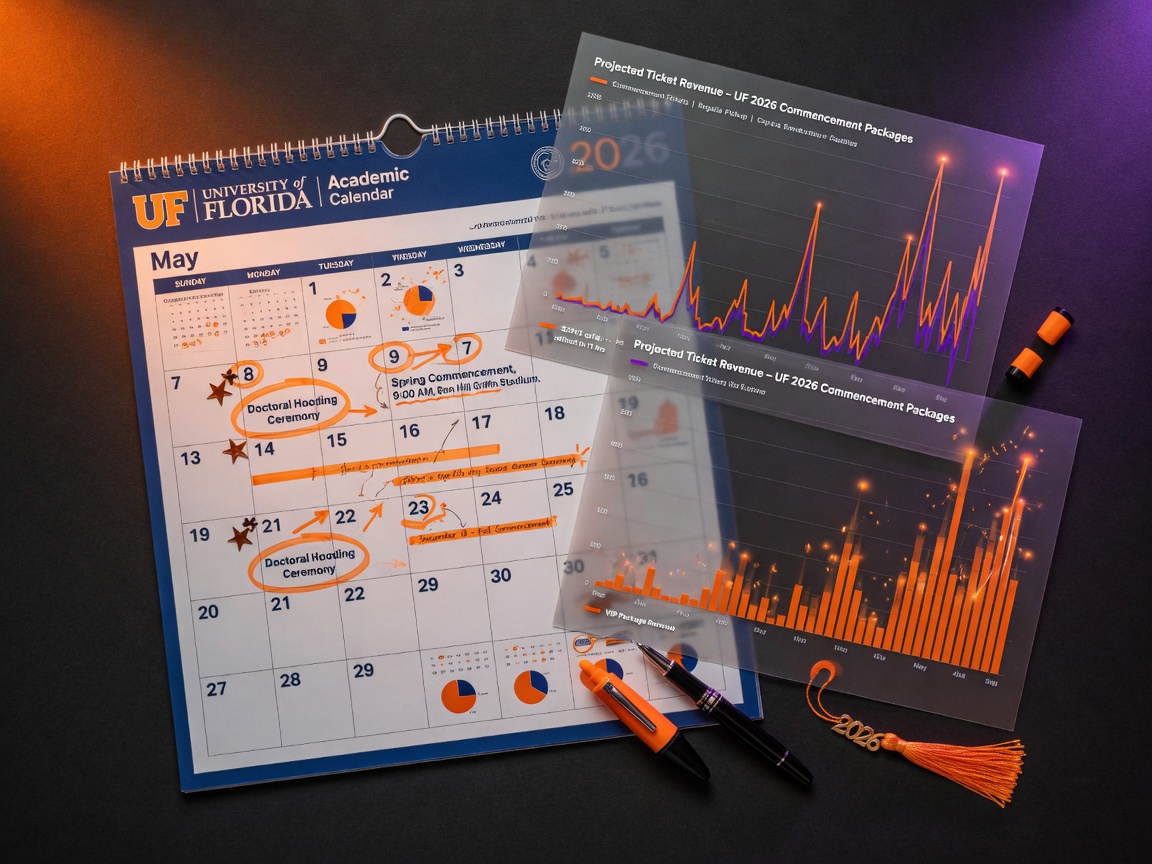
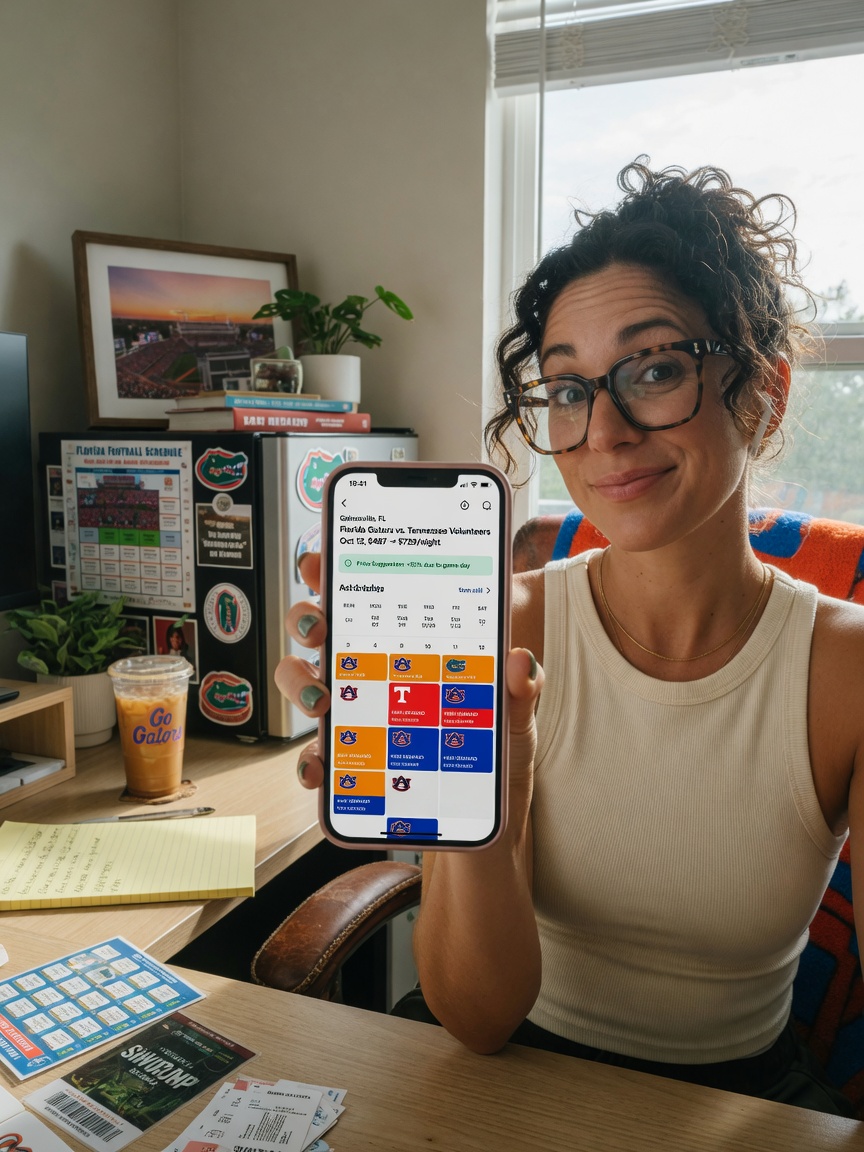
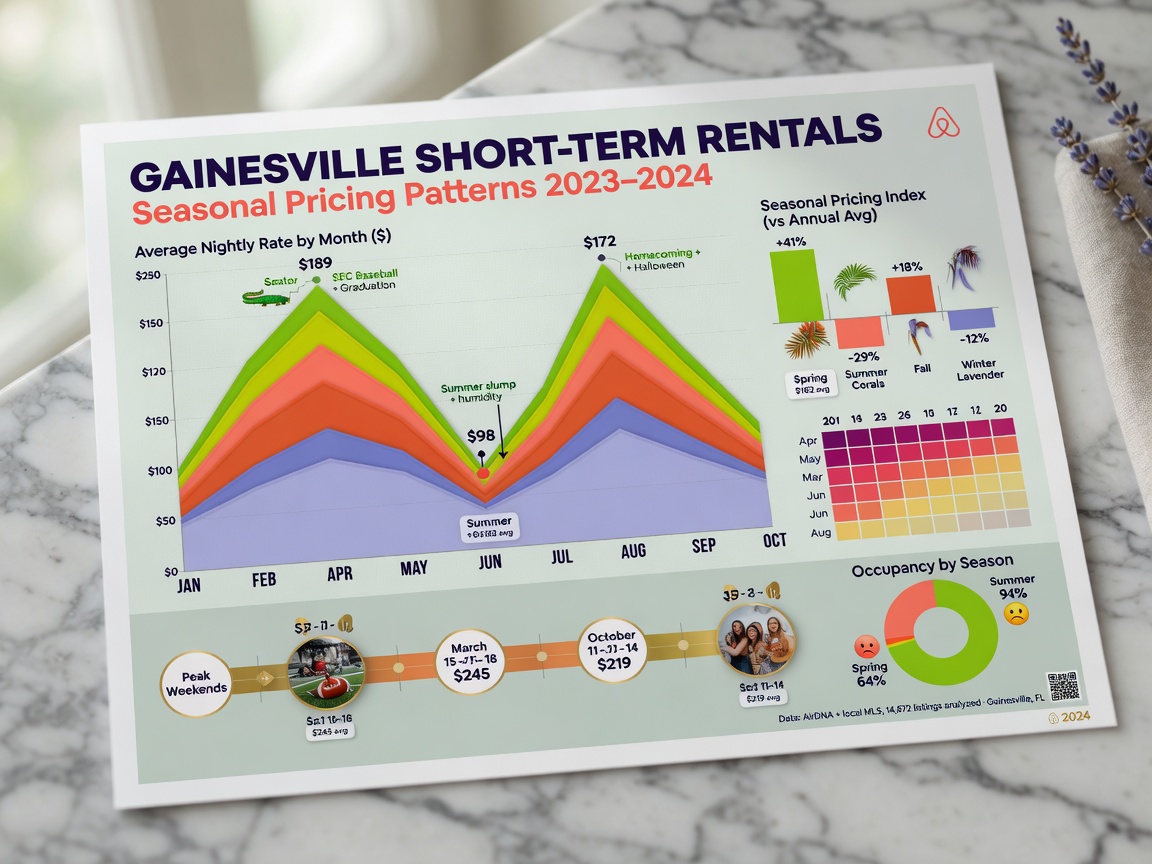
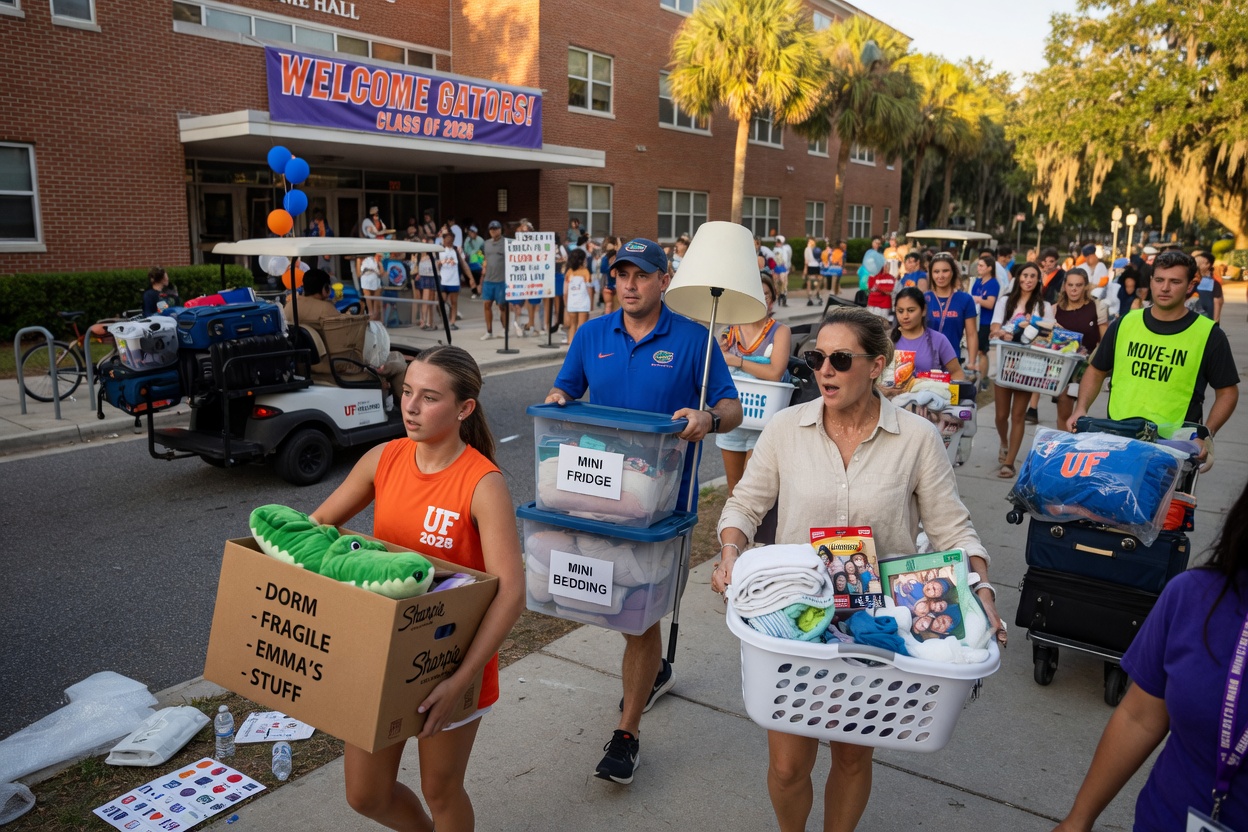
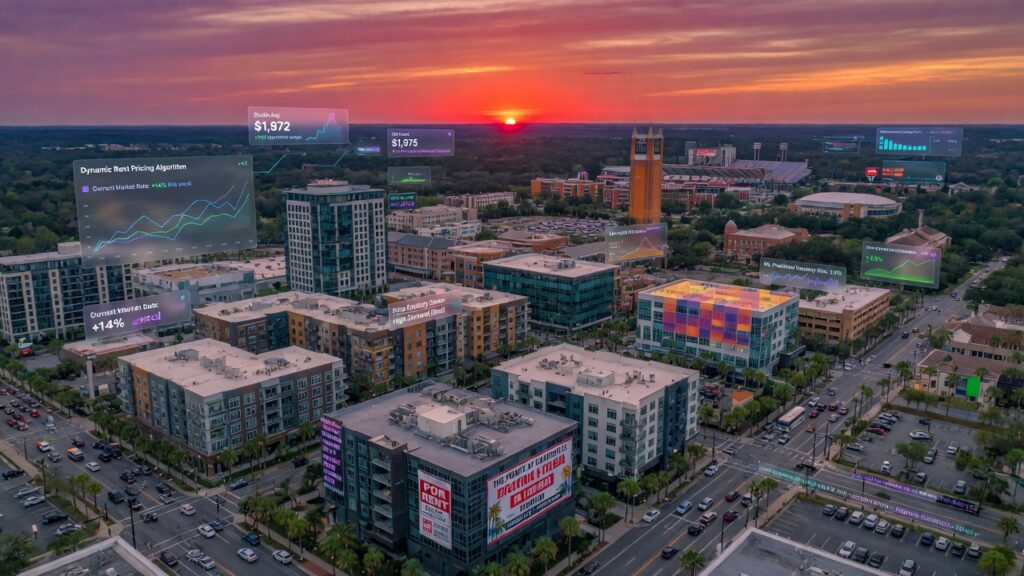
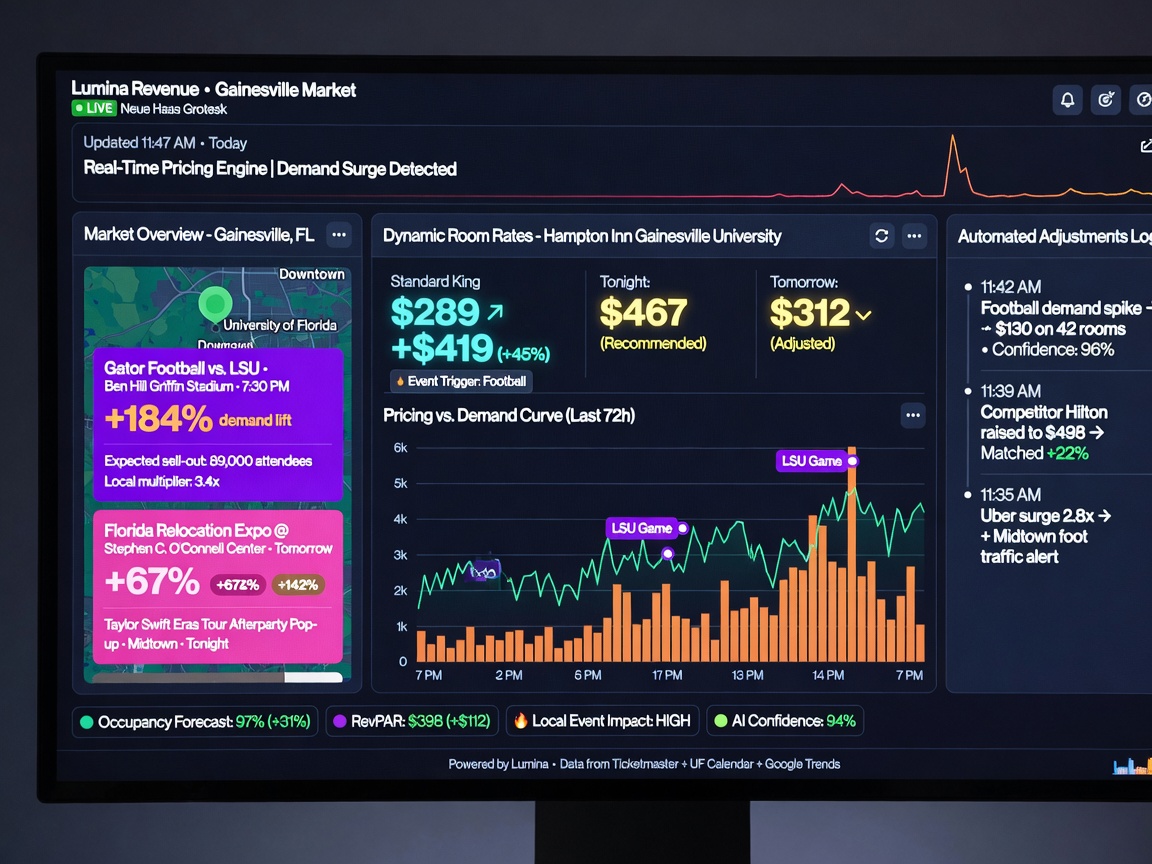
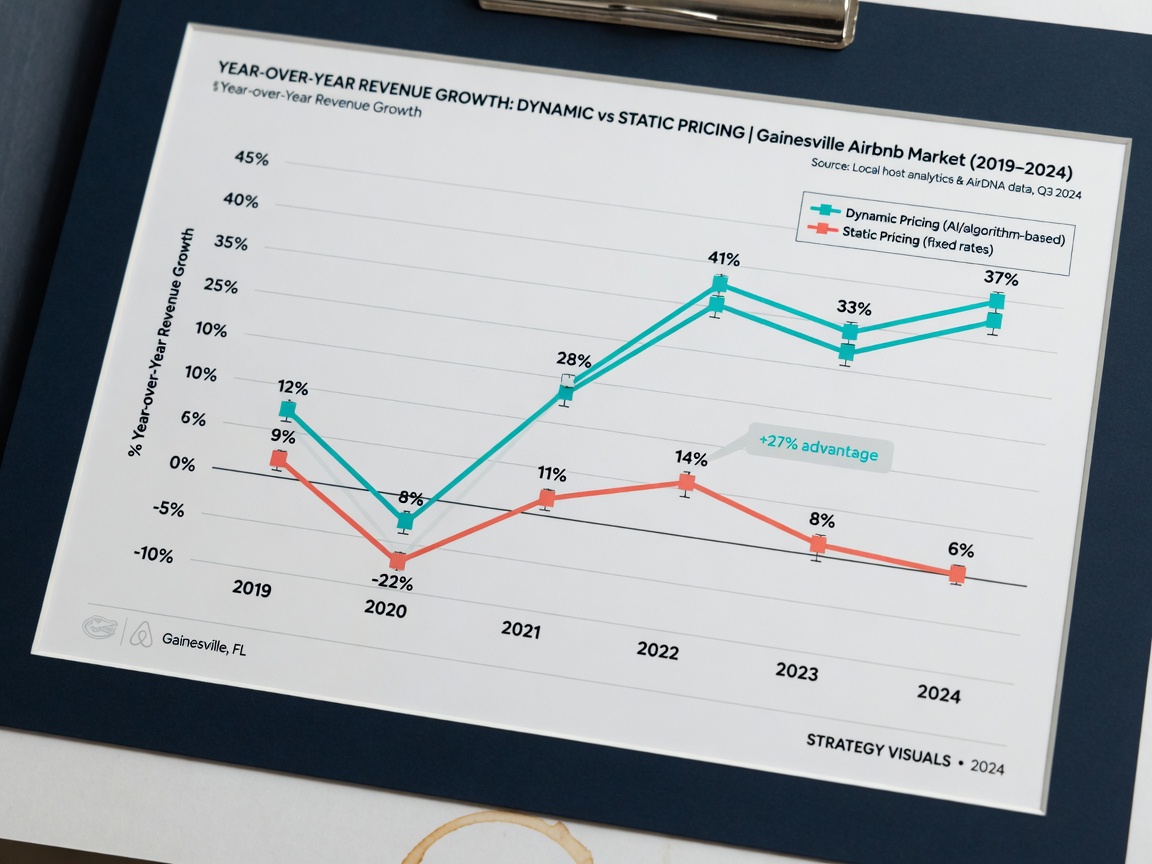
Dynamic pricing allows hosts to adjust rates in real time based on market conditions. In 2026, with increasing competition and sophisticated guest expectations, this approach is no longer optional—it’s essential for maintaining profitability.
Understanding Gainesville’s Unique Demand Drivers
Gainesville’s rental market is heavily influenced by three primary factors:
- University of Florida Academic Calendar: Move-in weekends, graduation, homecoming, and final exam periods create predictable demand spikes.
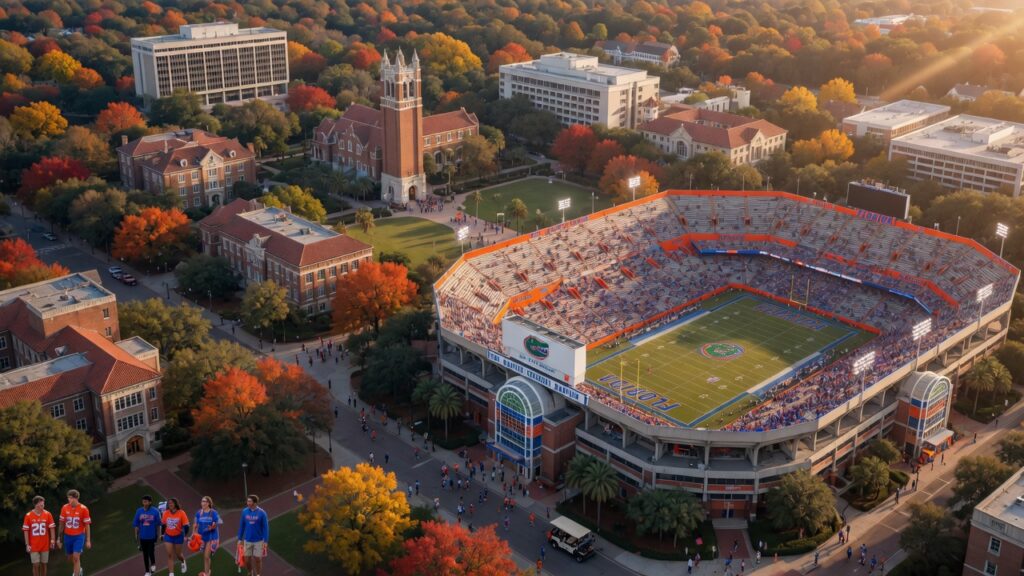
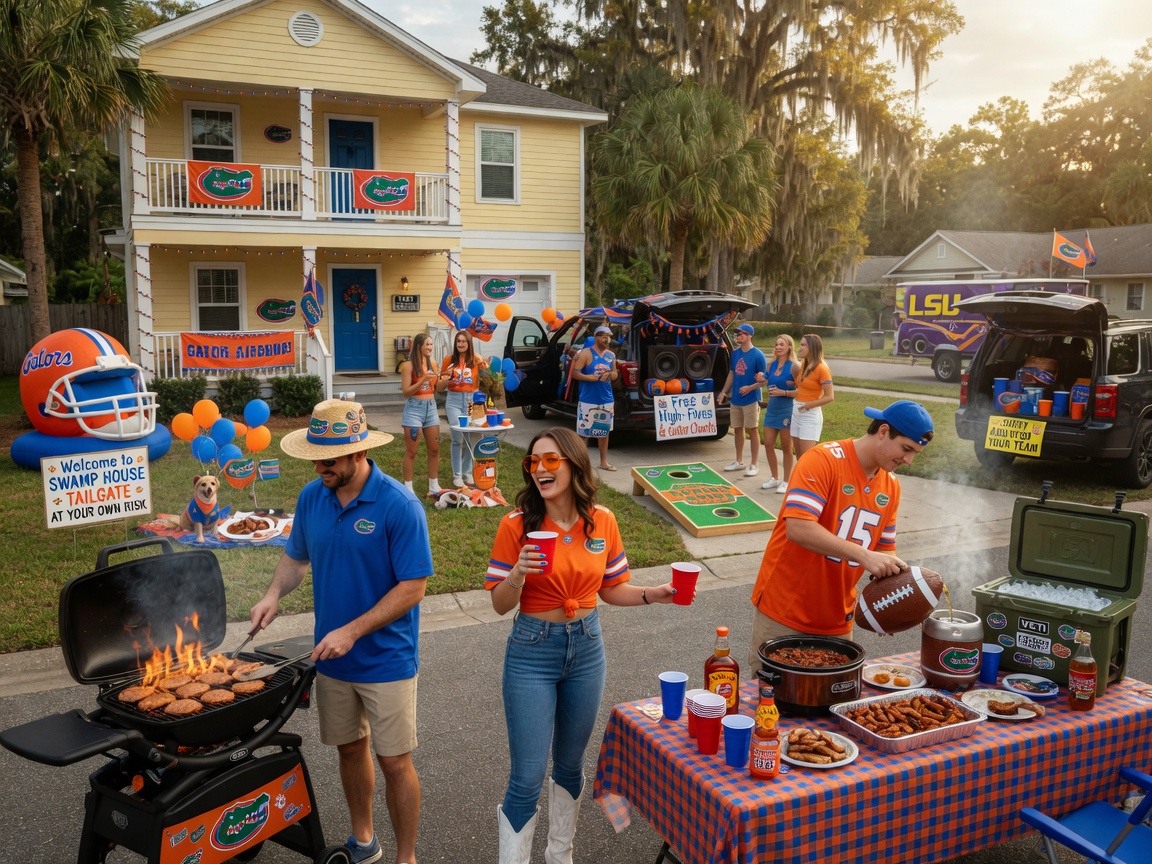
- Gators Athletics: Football, basketball, and other sporting events generate massive short-term rental demand.
- Local Events and Conferences: The Hippodrome, downtown festivals, and medical conferences at UF Health add additional layers of demand.
Key UF Calendar Events to Watch in 2026
Mark these dates in your pricing strategy:
Image Grid 2


- UF Spring Break (March 2026)
- Graduation Weekend (May 2026)
- Homecoming Week (October 2026)
- UF Football Game Days (August–November)
- Move-in Weekend for Fall Semester
- Final Exam Weeks (December and April)
Implementing Real-Time Pricing Tools
Several platforms offer sophisticated dynamic pricing specifically designed for short-term rentals. For Gainesville hosts, we recommend tools that integrate local event data and can respond to University of Florida’s academic schedule.
Top Dynamic Pricing Tools for 2026
- PriceLabs: Excellent for granular control and custom rules based on UF events.
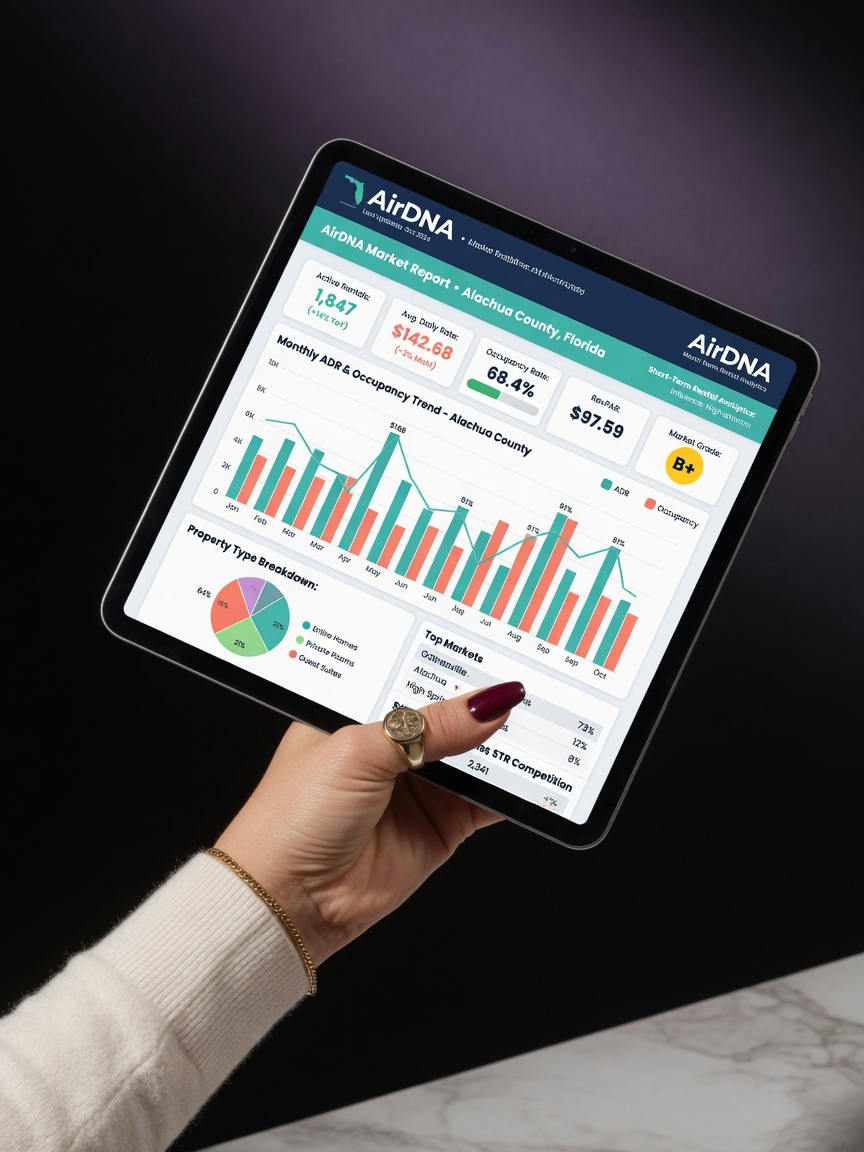
- AirDNA MarketMinder: Provides powerful local market analytics specific to Gainesville.
- Wheelhouse: Strong performance in university towns with event-based pricing algorithms.
- Smart Pricing by Airbnb: Improved significantly in recent years but should be supplemented with local intelligence.
Property Management Gainesville recommends combining automated tools with manual oversight, especially during major Gator game weekends when demand can surge over 300%.
Leveraging Local Demand Data Effectively
Successful dynamic pricing in Gainesville requires understanding hyper-local data patterns. Here’s how to build your data-driven strategy:
1. Historical Performance Analysis
Review your property’s performance data from the past three years. Identify which weekends consistently performed best and which dates regularly underperformed. Look specifically at occupancy rates and ADR (Average Daily Rate) during UF events.
2. Competitor Analysis
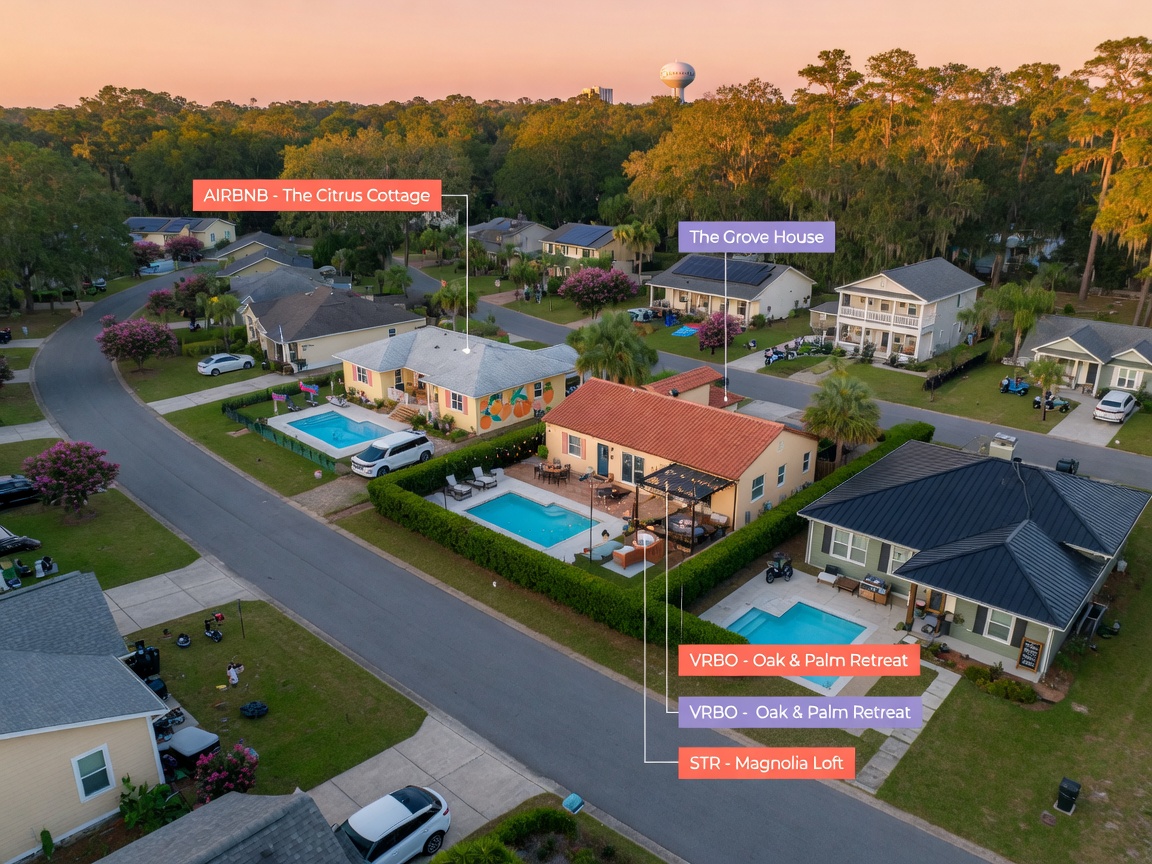
Monitor 15–25 comparable properties within a 2-mile radius of your listing. Track how their rates change in relation to local events. Tools like AirDNA or Beyond Pricing can provide this competitive intelligence automatically.
3. Event Calendar Integration
Integrate the University of Florida’s official calendar, Gainesville Sports Commission events, and local festival schedules directly into your pricing software when possible. Many advanced platforms now offer API connections to major event databases.
Creating a Seasonal Pricing Framework for Gainesville
While dynamic pricing adjusts daily, establishing a seasonal baseline helps maintain consistency and manage guest expectations. Consider this framework for 2026:
Peak Season (August–November)
Football season drives the highest rates of the year. Properties near campus or Ben Hill Griffin Stadium can command premium pricing, especially for multi-night stays during home game weekends.
High Season (January–April)
Spring semester, basketball season, and graduation create strong demand. Rates should be 25–40% above annual average during these months.
Shoulder Season (May–July & December)
These months typically see lower demand. Strategic rate reductions combined with targeted marketing to summer conference attendees and visiting families can maintain healthy occupancy.
Advanced Dynamic Pricing Techniques for 2026
Event-Based Price Multipliers
Create specific pricing rules for different types of events:
- Home football games: +65–120% depending on opponent ranking
- Graduation: +80–95%
- Regular UF class days during move-in: +35–45%
- Local festivals (Downtown Festival & Art Show): +30–50%
Lead Time Pricing Adjustments
Implement sliding scales based on booking window. Last-minute bookings for high-demand weekends should have minimum rates, while early bookings for slower periods can include attractive discounts.
Length of Stay Pricing
Encourage longer stays during high-demand periods by offering slight per-night discounts for 4+ night bookings while maintaining high base rates.
Technology and Automation for Gainesville Hosts
In 2026, successful hosts will rely on integrated tech stacks that include:
- Dynamic pricing software with AI capabilities
- Channel managers that update rates across Airbnb, VRBO, and Booking.com simultaneously
- Local event calendar integrations
- Review and reputation management tools
- Automated messaging that references local events
Common Dynamic Pricing Mistakes to Avoid
Even experienced hosts make these errors in the Gainesville market:
- Using generic national algorithms without local calibration
- Failing to adjust for Gator game day demand
- Setting rates too high during slower periods, resulting in zero occupancy
- Not accounting for special events at the O’Connell Center or Phillips Center
- Ignoring the impact of major conferences at the UF Hilton
Measuring Success: Key Performance Indicators
Track these metrics to evaluate your dynamic pricing strategy:
- Revenue Per Available Night (RevPAR)
- Average Daily Rate (ADR)
- Occupancy Rate
- Revenue Growth Year-over-Year
- Booking Window Trends
Property Management Gainesville clients using sophisticated dynamic pricing typically see 28–42% higher annual revenue compared to hosts using static pricing models.
Partnering with Local Experts
While technology is powerful, local market knowledge remains invaluable. Working with a Gainesville property management company that specializes in short-term rentals provides hosts with:
- Deep understanding of UF’s academic and athletic calendars
- Established relationships with local event organizers
- Real-time market intelligence
- Professional revenue management services
Conclusion: Preparing Your Gainesville Airbnb for 2026
The short-term rental landscape in Gainesville will continue becoming more competitive. Hosts who embrace dynamic pricing strategies informed by real-time data, University of Florida events, and local demand patterns will thrive, while those using outdated fixed-rate models will struggle.
By implementing the strategies outlined in this guide, you can position your property to capture maximum revenue throughout the year. The combination of smart technology and local market expertise creates the perfect formula for success in the Gainesville Airbnb market in 2026 and beyond.
Ready to optimize your short-term rental performance? Contact Property Management Gainesville today to learn how our local experts can help maximize your property’s revenue through advanced dynamic pricing and professional management.